Showing posts with label work. Show all posts

Sunday, August 1, 2010

Work History Part 7: RIT Electrical Engineering Dept.

Location: Rochester, NY
Position: Software / Firmware Engineer
Period: June 2010 - December 2010

Ever since I began my thesis work I've had a growing interest in applying my skills to the field of medicine and medical research. I find devices that interact with the underlying biomechanical processes of the human body fascinating. I enjoy learning about how the human body functions and technological advances ranging from neural modification to gene manipulation and artificial limb development.

Through the recommendation of a certain kindhearted software engineering professor, I was put in contact with the up-and-coming RIT Biomedical Engineering Dept. Within a matter of days I was hired by the RIT Electrical Engineering Dept. (which forms the backbone of the new biomedical engineering dept.) to begin working on the body area sensor network (BASN) project.

The BASN consists of multiple wireless nodes strapped to a user's body. Each node is about the size of a watch and the band is similar to a watchband. Each node collects biometric information, such as body temperature and limb orientation and acceleration, based on where it is positioned on the user's body. Each collector node wirelessly sends data back to a central access point. In turn the access point aggregates all of the data and wirelessly sends it to a USB dongle attached to a host machine where it is processed by a host-side application.

Each node consists of custom-designed PCB architecture and firmware API. A complementary API allows host-side applications to communicate with the nodes using the USB dongle. The centerpiece of each node is the Texas Instruments CC430 microcontroller. Wireless communication leverages the Texas Instruments SimpliciTI protocol.

The goal of the project is to implement a development platform that will allow future developers to create custom applications such as:
  • Seizure / muscle tremor detection and patient caretaker alert system.
  • Local positioning system using dead reckoning from a known starting location. Can be used to track firefighters as they enter a burning building.
  • Wireless electrocardiograph (ECG). Current ECG models use 10 wired electrodes and are cumbersome.
  • Soldier injury detection system. In a battle scenario, the command center can track the physical condition and stress levels of soldiers in the field.
Responsibilities and accomplishments:
  • Developed 3D proof-of-concept applications demonstrating the ability to capture and process biometric data.
  • Leveraged existing firmware to set up a low-power RF communication network between wireless nodes and a host-side USB dongle.
  • Implemented a device driver in Linux to provide an API for interacting with the RF network through the host-side USB dongle.

Saturday, May 15, 2010

Work History Part 6: RIT Industrial Engineering Dept.

Employer: RIT Industrial Engineering Dept.
Location: Rochester, NY
Position: LabVIEW Specialist
Period: December 2009 - May 2010

The Electrophotographic Development and Transfer Station (EDTS) fixture was a generous donation by Kodak to the Print Research and Image Systems Modeling Laboratory in the Center for Imaging Science at RIT. I briefly mentioned this job in a previous post.

The ultimate goal is to use the fixture as a tool to teach students about the fundamentals of xerography. Additionally, the fixture exposes the internal components of a xerographic printing press, which makes it a desirable candidate for running experiments that require modifying individual components, spaces between components, carriage speeds over specific stations, etc. Xerox expressed an interest in using the fixture to analyze the characteristics of small-particle developer (i.e. toner) and examining its impact on print quality.

I worked directly with the P10503 senior design team and representatives from both Kodak and Xerox. All of the team's documentation can be found on their website. The project poster (PPT) provides a general overview. My primary objective was to modify the existing rudimentary LabVIEW software in order to execute control over all of the various electrical and mechanical components of the fixture. When I began the fixture could not print an image. When I left it could. I call that a success!

Responsibilities and accomplishments:
  • Led a 6-person team consisting of mechanical engineers, an industrial engineer, an electrical engineer, and a software engineer.
  • Implemented LabVIEW software to control a flat plate xerographic printing fixture through NI DAQ hardware.
  • Wired electrical and mechanical components, including stepper motors, DC motors, relays, high voltage power supplies, and electrostatic voltmeters.

Monday, June 1, 2009

Work History Part 5: RIT CS Dept. Teacher's Assistant

Location: Rochester, NY
Position: Teacher's Assistant and Student Lab Instructor
Period: September 2008 - May 2009

This job was my saving grace. The CS dept. had an excellent arrangement where they would pay for 100% tuition costs and give out a multi-thousand dollar stipend in exchange for about 20 hours of TA work per week.

I enjoyed teaching new students about object-oriented programming and the difference between references and pointers. Some of the student projects were interesting too, like solving the traffic jam puzzle and peg board game.

Responsibilities and accomplishments:
  • Taught computer science labs in Java and C++.
  • Graded student programming assignments.
  • Answered student questions in the mentoring center.
  • Held CS1-CS4 test review sessions.

Monday, September 1, 2008

Work History Part 4: Xerox Corporation

Employer: Xerox Corporation
Location: Webster, NY
Position: Software / Firmware Engineer
Period: June 2008 - August 2008

Xerox is a global document management company specializing in the production of workstation printers, large scale printing presses, multifunction systems, and the supplies required to run such devices.

Nowadays Xerox seems to be shifting its focus to collaborative web technologies to make it easy to share, edit, and print digital media.

Xerox is named after the process of xerography, which was invented by Chester Carlson in 1938. The Center for Imaging Science (CIS) at RIT is named in honor of Mr. Carlson. A little over a year after I worked for Xerox I was hired to perform research on a flat plate xerographic printing press for the Print Research and Image Systems Modeling Laboratory in CIS.

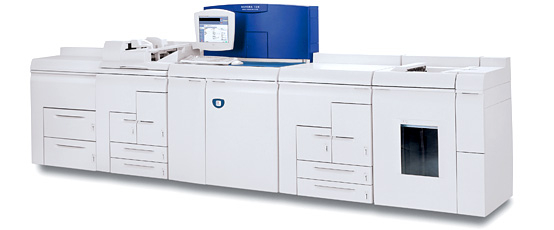
While working for Xerox I was part of the Platform Development Unit / Control Systems Platform group and was part of the Xerographics / Image Path Software team. I helped maintain and develop the Nuvera Digital Production System line of products; however, my primary task was to implement C++ code to control a down-shooting printhead fixture.

The down-shooting fixture was a digital coater device capable of printing clear gel ink on paper. Such a device allows users to coat specific areas of a document with gloss instead of performing a flood coat of the entire page. Also, such a device can print Braille on pharmaceutical bottles. The European Union has made it mandatory that the name of all medications be printed on the packaging in Braille.

Responsibilities and accomplishments:
  • Migrated digital coater LabVIEW code to production-worthy C++ application code.
  • Designed a software architecture for Controller Area Network communication.
  • Analyzed and implemented solutions for problems with the Nuvera Digital Production System printer.

Saturday, September 1, 2007

Work History Part 3: MITRE Corporation

Location: Bedford, MA
Position: Network Software Engineer
Period: June 2007 – August 2007

MITRE Corporation is a not-for-profit organization that manages Federally Funded Research and Development Centers (FFRDCs). I worked for the Command and Control Center (C2C) as part of the Tactical Edge Solutions group.

I worked on the MIDS LVT 1 MultifunctionaI Information Distribution System (MIDS) Low Volume Terminal (LVT) radio developing an interface that would allow messages to be passed between the radio network and an application running on a host machine. One application was a situational awareness visualization.

Responsibilities and accomplishments:
  • Implemented a gateway between military radio networks and the Global Information Grid using an enterprise service bus.
  • Programmed a Java controller to exercise the MIDS Low Volume Terminal Platform D Ethernet interface.
  • Configured terminals using time division multiple access communication method.

Friday, December 1, 2006

Work History Part 2: Excellus Blue Cross Blue Shield

Location: Rochester, NY
Position: Java Technology Specialist
Period: June 2006 – November 2006

Excellus BCBS is New York State's largest nonprofit health plan. Their e-service production website provides a claims processing workflow used by patients, medical professionals, and insurance agents.

During my employment the website was relying on backend services implemented in a legacy COBOL architecture. Steps were being taken to replace the entire backend with a modernized J2EE event-driven architecture.

Responsibilities and accomplishments:
  • Developed long-range service-oriented architecture goals for a legacy software system.
  • Investigated and compared the benefits of utilizing modern software technologies such as J2EE and Apache Struts.
  • Analyzed and implemented solutions for problems regarding the Excellus /Univera e-service production website.

Thursday, December 1, 2005

Work History Part 1: Harris RF Communications

Location: Rochester, NY
Position: Software / Firmware Engineer
Period: May 2005 - November 2005

Harris specializes in developing communications equipment for the DOD, including RF communications, SATCOM, and GPS networks.

I worked on maintaining and developing the FALCON II RF-5800H-MP HF/VHF manpack (MP) radio. Nowadays Harris is focusing on the development of the FALCON III series. The newest member is the FALCON III RF-7800M-MP multiband manpack radio.

Responsibilities and accomplishments:
  • Analyzed and implemented solutions for problems regarding the FALCON II manpack radio state machine, radio programming interface, and front panel display.
  • Wrote Visual Basic scripts to test radio to phone communication, UDP transmissions, and GPS synchronization.
  • Analyzed and tested C++ code to remove memory leaks.